



The Psychodynamic Promise of CPSP Is Not Finished
When we enter a room, we do not encounter an abstract category called “spiritual distress.” We encounter a human being whose present experience emerges from affect, memory, attachment, relationships, culture, bodily states, losses, expectations, unconscious patterns, and systems of meaning. We encounter families carrying their own histories and anxieties. We ourselves enter the encounter with histories, affects, expectations, and vulnerabilities of our own. And all of this occurs within healthcare institutions that generate powerful conscious and unconscious dynamics.
Psychodynamic chaplaincy should help us read that complexity.

Finding Our Way: Who Said It Was Going to Be Easy
Finding our way in life is rarely easy. We are born into a world already filled with voices telling us who we are and who we should become. We learn early how to smile to belong, how to be cute, how to protect ourselves from rejection, how to succeed, and how to hide those parts of ourselves that are less welcomed. Without ever quite noticing, we can spend years becoming the person our family and the world have taught us to be.

The Poet, the Psychotherapist, and the Theologian
Perhaps we can best understand this movement as an interdisciplinary conversation among poets, psychotherapists, and theologians, each bringing their own ideas and insights to our understanding of the past, the present, and what the future might hold. Hopkins invites us to attend to inscape, the distinctive shape of a life and the particular way a person expresses who they are. Freud turns our attention to history, asking what from the past has become present within us and continues to shape how we experience ourselves and others. Moltmann turns us toward hope, asking what from the future might become present through us and open possibilities beyond what our history has taught us to expect. And Heaney brings these perspectives together in the possibility that hope and history can rhyme, that the future need not erase the past, but may open the present to possibilities the past could not imagine.

Pastoral Care Documentation: An Aspect of the Care We Provide
A pastoral encounter does not simply end when the chaplain leaves the room. Something of that encounter remains: a moment of recognition, the sense of a meaningful conversation, or the lasting impression of having been heard and taken seriously. The pastoral care note provides another way for something of that encounter to remain available to those who continue caring for the patient.
A well-written note helps the next member of the healthcare team learn something about the patient that might otherwise go unnoticed. An attending physician may better understand why a family is struggling with difficult decisions at the end of a patient’s life. Longstanding family tensions or other unfinished business of life may shape how people respond to the impending death of someone they love. A nurse may recognize that a patient who appears calm is, in fact, deeply worried. Another chaplain may understand why a follow-up visit is important. A social worker may become aware of a family conflict that is complicating communication or decisions about the patient’s ongoing care.
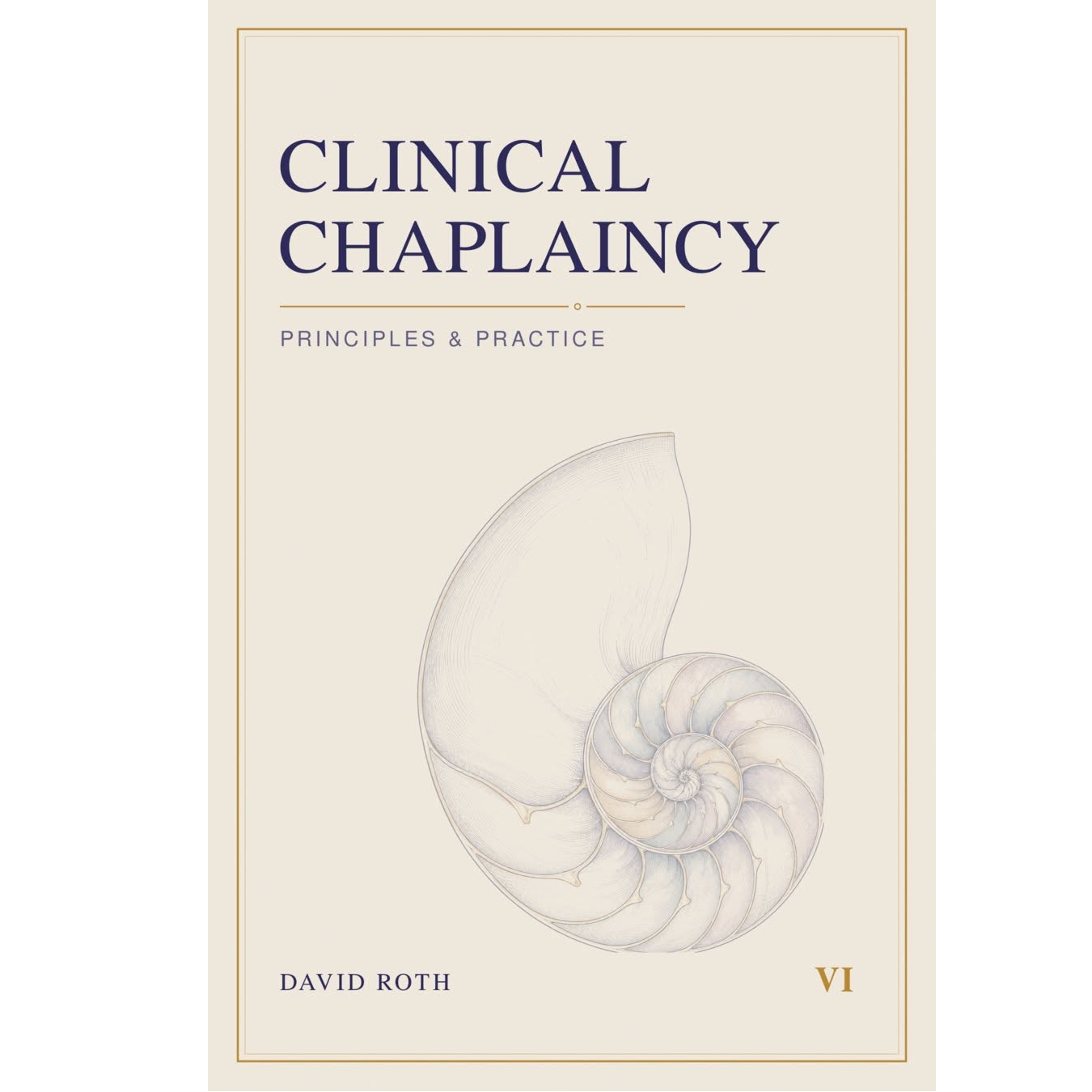
Clinical Chaplaincy: Principles & Practice, by David Roth
Meaning, Affect, Relationship, and System in the Recovery of Soul
A Review of David’s Roth’s Clinical Chaplaincy: Principles & Practice by Dr. Robert Charles Powell
100 years after it was invented – yes, “invented” – by Anton Boisen. Roth’s concise but comprehensive and well-organized study of the field could not have been written by someone at the start of a career. Clinical Chaplaincy reads like there was a skeleton of a book early on that later got fleshed out – layer upon layer – over time – a lot of time.
A General Introduction to CPSP Supervisory Training
The CPSP Standards begin with a straightforward premise: clinical competence is the foundation for becoming a supervisor. Those who enter supervisory training come with significant pastoral and clinical experience, appropriate graduate education, substantial CPE/T formation, CPSP certification as a board-certified clinical chaplain or pastoral counselor, and a demonstrated record of personal maturity and professional competence. While these qualifications matter, they are only the beginning.

Meeting the Trainee Where They Are: Beyond the Cliché
Wilfred Bion, the British psychoanalyst whose work is familiar to CPSP members through our emphasis on Tavistock group relations, offered a profound way of thinking about helping relationships. He encouraged psychoanalysts to approach each encounter "without memory or desire." Bion was not suggesting that we abandon what we know. Rather, he reminded us that our expectations and assumptions can prevent us from seeing what is actually before us. He invites us into a posture of agnosticism, an intentional willingness to remain open, to tolerate the ambiguity of not knowing, rather than rushing toward a certainty of opinion.
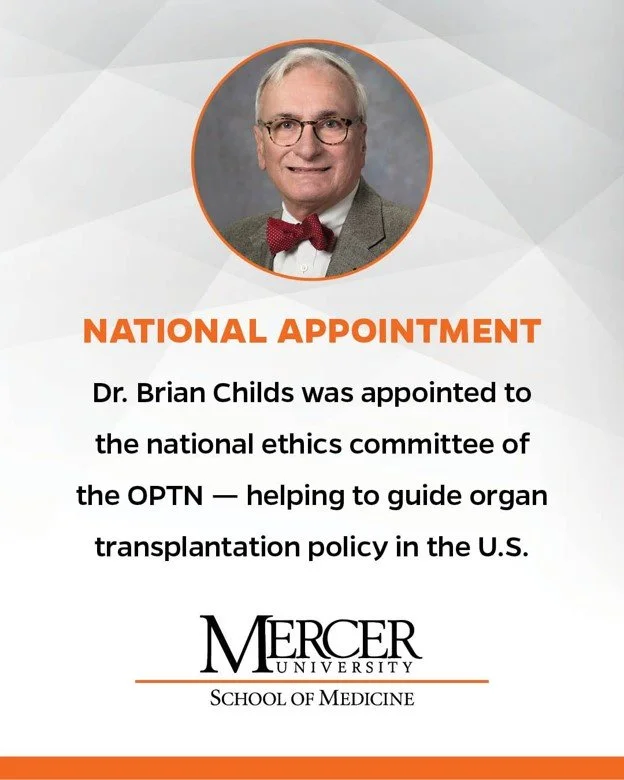
CPSP Diplomate, Dr. Brian Childs, Appointed to Organ Procurement and Transplantation Network
The Pastoral Report is pleased to congratulate our CPSP colleague, Brian H. Childs, MDiv, PhD, HEC-C, on his appointment to a three-year term on the national ethics committee of the Organ Procurement and Transplantation Network (OPTN), a division of the U.S. Health Resources and Services Administration (HRSA).

When Showing Up Really Matters: Listening Without Judgment
Suicide continues to be a profound public health challenge in the United States. In 2023, more than 49,000 Americans died by suicide, averaging one death every eleven minutes.
Suicide touches every community, though its impact falls unevenly across the population. Men die by suicide at significantly higher rates than women, while women more often report suicidal thoughts and survive suicide attempts. Age tells another story. Although suicide rates are highest among older adults, suicide remains one of the leading causes of death among those aged between 10 and 34. These patterns remind us that suicide is not a single problem with a single face; it is a human crisis that appears differently across the lifespan and within different communities.

The Parentified Child: When Childhood Becomes a Caretaking Role
At its core, parentification is a profound reversal of roles and boundaries. Over time, the child learns to equate love and acceptance with usefulness, believing it is their job to put others' needs before their own. Rather than experiencing childhood as a time of discovery and growth, they become hypervigilant, overly responsible, and, by necessity, prematurely mature. In essence, parentification results in the loss of childhood itself, as the child is compelled to carry burdens that belong to the adult world. What is often praised as maturity may actually reflect a necessary adaptation to circumstances that left little room for the ordinary experiences of childhood.
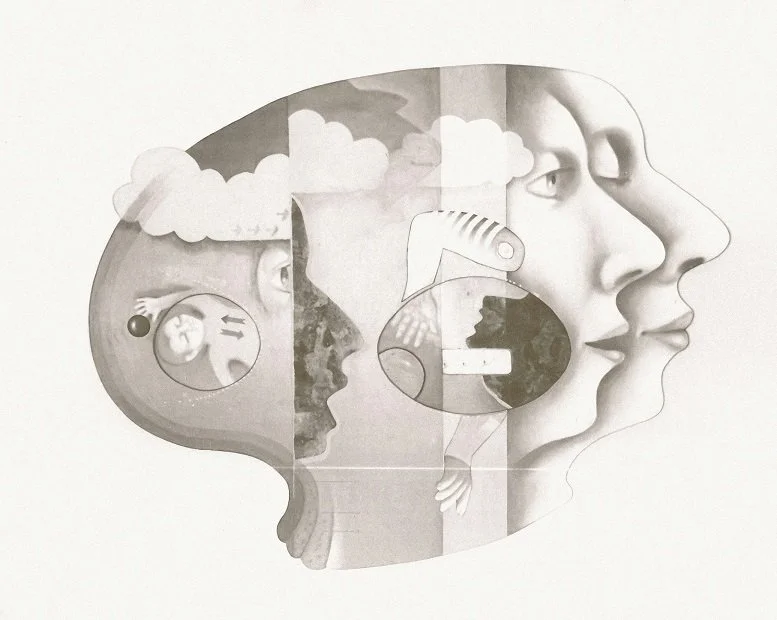
The Courage to Know and to Become Oneself: A Psychodynamic Journey
The psychodynamic approach begins with a simple but unsettling realization: we are often strangers to ourselves. We do not fully know the person we see in the mirror.
We tend to think of ourselves as rational individuals, fully aware of why we think, feel, and act as we do. The psychodynamic tradition, however, suggests that much of human experience lies beyond our conscious awareness. Hidden from view lies a deeper psychological world shaped by hidden desires, unresolved conflicts, fears, memories, and relational patterns. These dynamics influence us long after we believe we have moved beyond them. From this perspective, what we observe outwardly reveals only a fraction of the inner life shaping our behavior.

A Fraying Narrative of One’s Life
So much of who we are is held in the stories we tell ourselves. We live inside those stories, and in many ways, they look after us. We weave the tapestry of our lives with the threads of lived experience, moments spun together into something that feels meaningful and fits us well.
With dementia, those threads begin to unravel, and life begins to fray at the seams.
But what I have noticed, what I wanted the poem to honor, is that the person does not simply disappear overnight. It is an insidious unraveling, slipping in like nightfall, on slippered feet.

The Paradox of Helplessness: Enhancing Empathy and Authenticity in Hospital Chaplaincy
It may sound counter-intuitive that when a clinically trained hospital chaplain acknowledges and appropriately manages feelings of helplessness when confronted by the intractable suffering of the patient, it can enhance their empathy, authenticity, and overall ability to connect with those they minister to. Embracing their own feelings of helplessness emphasizes the shared human experience of vulnerability and uncertainty.

Here’s to Perry Miller!
At the recent CPSP plenary, Perry Miller invited those gathered in the hospitality suite to choose a song that held personal meaning. What followed was deeply relational and, I would not hesitate to say, life-giving, shared moments of storytelling, laughter, and music that reflected the wide range of traditions and experiences present in the room. The atmosphere was open and engaging, with colleagues and trainees moving easily between conversation and song in a way that made the gathering feel both informal and deeply meaningful.
It is in moments like these that the heart of the College of Pastoral Supervision and Psychotherapy community becomes most visible. What makes CPSP so meaningful, among its many strengths, is that our covenant relationship is central and informs both who we are together and the work we are called to do. Relationship, rather than status, shapes the life of the community, and that relational grounding is especially evident in shared moments like storytelling and music.
Music is often described as a mirror of culture, reflecting how people express themselves, what they feel, and what they believe. While this is true, it's only part of the story.
The Recovery of Soul in Clinical Pastoral Education: A Psychodynamic Imperative
There is an increasing emphasis on skills, interventions, and measurable outcomes, while diminishing attention is given to the soul, to depth, and to the inner life of the chaplain. This imbalance is not only evident at the bedside but is also reflected within chapter life itself. When the psychodynamic approach is no longer central from our encounters with the Living Human Document (Boisen), to case presentations, to Group Relations, and ultimately into the life of the chapter, we risk losing something essential. We risk losing the soul of CPSP.
Clinical pastoral work is not merely skill-based work. It is soul work. And when primary process is neglected, both the chaplain and the work become diminished, reduced to function rather than formation, to intervention rather than presence.
Blessed are the Peacemakers: The Belfast Agreement
“Blessed are the peacemakers” sounds simple enough when you say it, and yet in practice, it’s anything but. Northern Ireland during the thirty years of the Troubles is a clear example of this; sectarian violence wasn’t just political or religious, it was more complex than that. It was woven into the very fabric of daily life, the normal backdrop of people’s unfolding lives. And yet, somehow, over time, something began to shift.
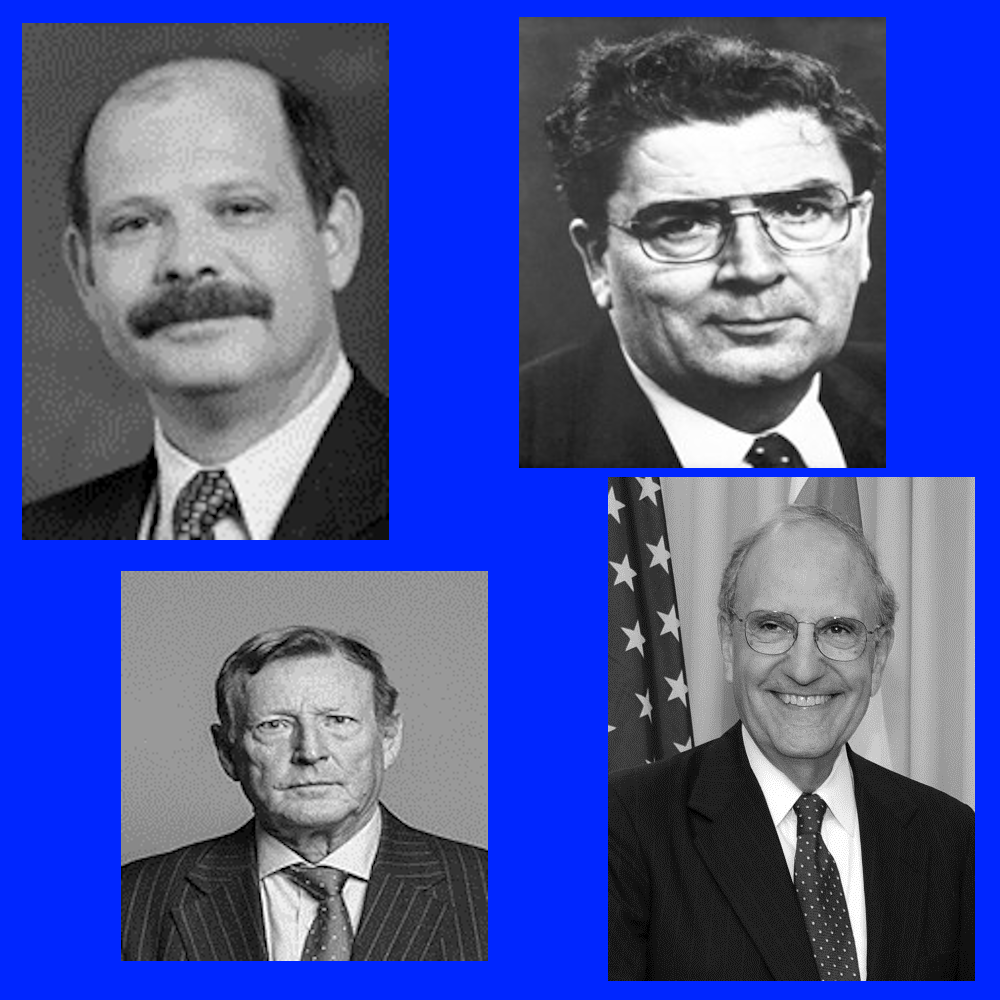
The Good Friday Agreement, also known as the Belfast Agreement, in 1998 didn’t suddenly fix everything, but it marked a real turning point, a hinge moment in the history of the Troubles. It emerged after long, frustrating negotiations and the efforts of individuals committed to finding a way out of the cycle of violence.
This paper looks at some of those figures, those who risked themselves to remain in dialogue, who found ways to sit down, listen, and push things forward in the hope of a shared future together. The process was tense and, at times, messy, but that’s part of the point. Peace, at least in this case, wasn’t clean or ideal. It was built slowly, through compromise, trust, and persistence.

When Learning Threatens Identity: Discerning Learning Problems and Problems About Learning in CPE Supervision
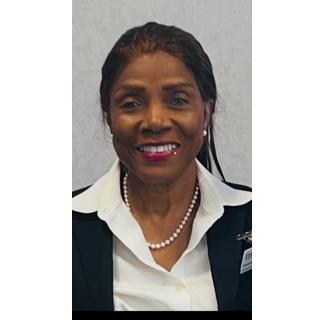
Within Clinical Pastoral Education (CPE), supervisors are frequently called to distinguish between a learning problem: a deficit in skill, knowledge, or method, and a problem about learning: a psychological, cultural, or defensive barrier that interferes with the learning process itself. This distinction is essential for effective supervision, particularly when trainees unconsciously use cultural traditions, professional identity, or linguistic limitations to avoid authentic engagement with peers and the deeper work of self-awareness. This article explores these dynamics through the case of “TVB,” a seventy-year-old accomplished healthcare professional with multiple graduate degrees who struggled to engage her peer group when her verbatim was perceived as imperfect. Drawing from Ekstein and Wallerstein’s psychoanalytic supervision framework and Vygotsky’s Zone of Proximal Development (ZPD), the article offers a clinical-supervisory lens for identifying cues of resistance, differentiating developmental from defensive barriers, and guiding trainees toward growth. Contemporary supervisory scholarship and Mezirow’s adult learning framework are integrated to provide a practical supervisory model for CPE
The Soul of the Cure: Beyond Technique
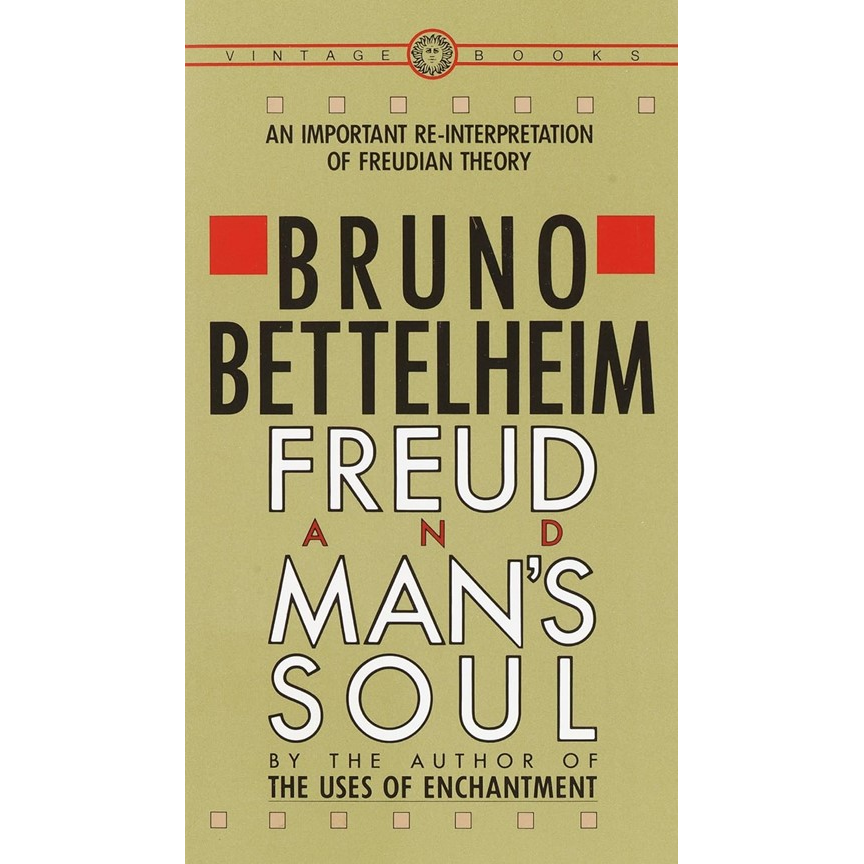
It is easy to think of Freud as a detached explorer of the human mind, someone who saw our inner lives as a hidden landscape of unconscious drives and rigid structures. Seen this way, psychoanalysis can feel like a process of decoding symptoms and dismantling defenses, as if the psyche were a puzzle to be solved. While this perspective isn’t entirely wrong, it captures only part of the truth. In Freud and Man’s Soul, Bruno Bettelheim restores a different Freud: one whose work was grounded not in clinical distance, but in relationship, in presence, and in the profound experience of being genuinely known.

Identity, Awareness, and the Courage to Be
We often talk about identity as if it were fixed, something we have settled on for ourselves, and yet identity is rarely fixed; rather, it is a dynamic process. In reality, we are always in the process of becoming ourselves. Our identity is shaped, moment by moment, by the tension between our experiences of others and our own inner perceptions, or, as Anton Boisen called it, our “inner world” of meaning and experience. To become a self is not something we achieve alone; we become who we are only through relationships.
Pastoral Care has One Fundamental Aim
The origins of pastoral care lie not in credentialing, policies, or procedures, but in the ancient human response to suffering: the willingness to step beyond routine and role when another person’s pain demands attention. At its heart is the timeless call to love one’s neighbor, a calling older than hospitals, ethics boards, or clinical pastoral training programs. Campbell (b. 1938–) insisted that this ethic of love and the demands of professionalism are always in tension, and he refused to smooth over that tension. He urged pastoral care providers to acknowledge it, feel it, and reflect on how it shapes and informs who we are.