The Soul of the Cure: Beyond Technique
By George Hull
Editor, Pastoral Report - The Newsletter of the College of Pastoral Supervision & Psychotherapy
Transference provides the impulse necessary for understanding… essentially, one might say, the cure is effected by love. - Sigmund Freud
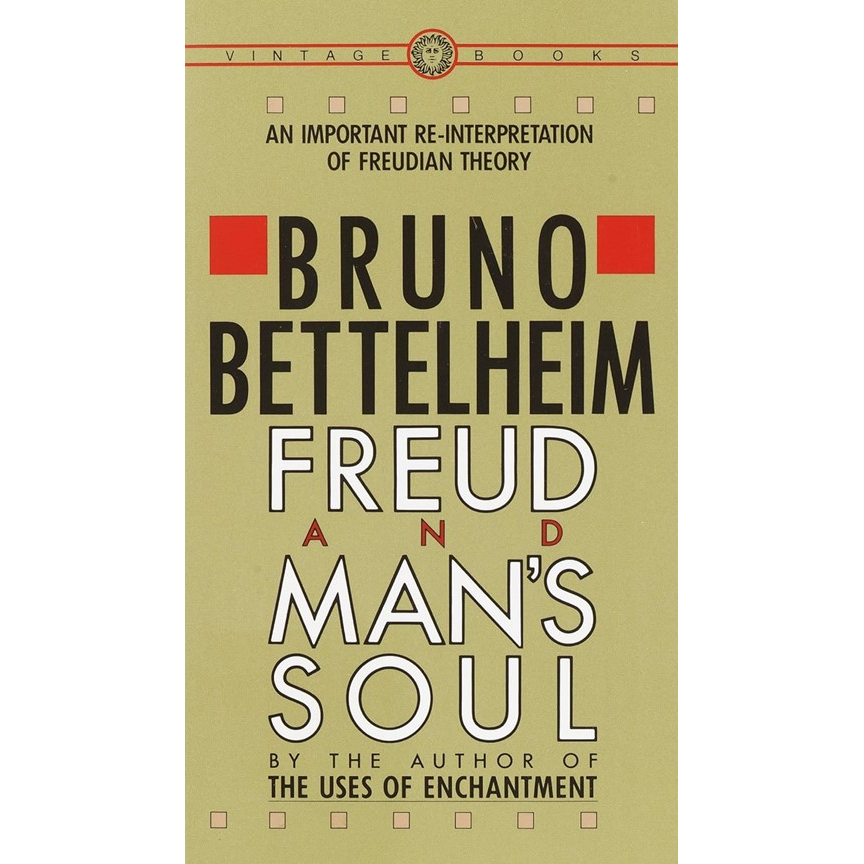
It is easy to think of Freud as a detached explorer of the human mind, someone who saw our inner lives as a hidden landscape of unconscious drives and rigid structures. Seen this way, psychoanalysis can feel like a process of decoding symptoms and dismantling defenses, as if the psyche were a puzzle to be solved. While this perspective isn’t entirely wrong, it captures only part of the truth. In Freud and Man’s Soul, Bruno Bettelheim restores a different Freud: one whose work was grounded not in clinical distance, but in relationship, in presence, and in the profound experience of being genuinely known.
Bettelheim’s core insight is that Freud’s work went beyond addressing the intellect in the abstract. He worked with real people whose suffering was woven into their personal histories and their deepest relationships. Freud understood that because our wounds arise in connection with others, healing must happen in connection as well. Bettelheim emphasizes that Freud saw the analyst not as a detached technician observing a specimen, but as a Mitmensch, a “fellow human being.” By returning to Freud’s original German, Seele (soul) over “mind,” Liebe (love) over “alliance,” and Sorge (care/attention) over “method”, Bettelheim shows how easily therapy can become an empty routine when its human dimension is overlooked.
Freud himself recognized the limits of theory alone. In a 1906 letter to Carl Jung, he wrote:
“Transference provides the impulse necessary for understanding… essentially, one might say, the cure is effected by love.”
Bettelheim reads this not as a metaphor, but as a clinical truth: interpretation only has the power to transform a life when it is carried in a relationship where the patient feels genuinely attended to. Without that presence, even the most brilliant insight remains cold and powerless.
Ultimately, Bettelheim reminds us that psychoanalysis is not primarily about mastering ideas or unraveling the mind’s secrets. It is about entering a space where another human being can be present with your inner life, where your experience can be seen, witnessed, and understood. Freud may have explained why we suffer in terms of drives, but he understood how we heal in relational terms. It is that relational presence, the analyst as Mitmensch and the therapeutic alliance grounded in attention and care, that gives psychoanalysis its transformative power.
A Word about Bruno Bettelheim
Bruno Bettelheim is celebrated for his enduring contributions to the understanding of Freud, emphasizing psychoanalysis as a practice rooted in human presence and ethical engagement rather than as a collection of techniques or abstract theory. He highlighted the relational nature of healing, insisting that therapy works when patients are genuinely seen and witnessed. While some of his ideas and methods have sparked controversy, his focus on the human dimension of Freud’s work continues to shape how we understand the transformative power of psychoanalysis. This emphasis on relational presence resonates deeply with the core concepts of pastoral care, in which transformation occurs not through advice or instruction but through attentive listening, compassionate presence, and the experience of being fully acknowledged by another human being.
Freud and Man’s Soul: New York: Alfred A. Knopf, 1983. ISBN 0394524810 / 9780394524813