The Recovery of Soul in Clinical Pastoral Education: A Psychodynamic Imperative
By Rev. Dr. Francine L. Hernandez, CPSP Diplomate since 2003. Episcopal Health Services, Inc & L & F Hernandez Consultants, Inc.
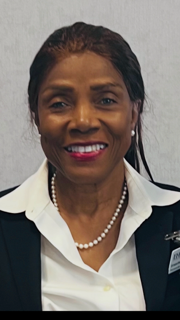
Rev. Dr. Francine L. Hernandez
I. Introduction: Naming the Crisis
While attending the 2026 Plenary of the College of Pastoral Supervision and Psychotherapy, I found myself deeply intrigued and concerned by a seminar led by Drs. Perry Miller and Jonathan Freeman. As I reflected on chapter life and the original intention behind the formation of this community, it became evident that a critical element is eroding: primary process.
There is an increasing emphasis on skills, interventions, and measurable outcomes, while diminishing attention is given to the soul, to depth, and to the inner life of the chaplain. This imbalance is not only evident at the bedside but is also reflected within chapter life itself. When the psychodynamic approach is no longer central from our encounters with the Living Human Document (Boisen), to case presentations, to Group Relations, and ultimately into the life of the chapter, we risk losing something essential. We risk losing the soul of CPSP.
Clinical pastoral work is not merely skill-based work. It is soul work. And when primary process is neglected, both the chaplain and the work become diminished, reduced to function rather than formation, to intervention rather than presence.
II. What is Primary Process? Reclaiming the Depth Dimension
Primary process refers to the inner life, the unfiltered, often unconscious movement of thoughts, feelings, images, and meanings that arise within both the chaplain and the patient. It is not linear, controlled, or outcome-driven. Rather, it is symbolic, affective, and deeply grounded in the emotional and spiritual core of human experience. Drawing from psychodynamic understanding, primary process is where the soul speaks. It is encountered in the pauses, in the tears that come before words, in the images patients use to describe their suffering, and in the internal responses evoked within the chaplain. It is the space where transference and countertransference emerge, where meaning is not yet organized, and where the deepest truths of a person’s story begin to surface.
In contrast, secondary process is structured, logical, and task-oriented. It seeks to organize, interpret, fix, and move toward resolution. And sadly, checking boxes has almost flatlined primary process. While necessary, secondary process becomes problematic when it dominates the encounter, bypassing the deeper emotional and spiritual realities present in the room. My writing—Cave Walker: A Psychodynamic Approach to Pastoral Care and Bring a Chair, Not a Needle is my intentional effort to call both new and seasoned trainees back to the depth and soul of this work. This is the tension we are now witnessing.
When chaplains are trained primarily in skills, interventions, and outcomes without equal attention to their inner life, they begin to function almost exclusively in secondary process. They learn what to say, but lose the capacity to hear. They learn what to do, but lose the ability to be present.
Primary process calls us back to a different posture. It invites the chaplain to slow down, to attend to what is emerging beneath the surface, and to listen not only to the patient’s words, but to the echoes within their story and within themselves. It requires a willingness to sit in ambiguity, to resist premature closure, and to allow the Living Human Document to unfold in its own time.
This is the heart of clinical pastoral formation.
Without primary process, there is no depth.
Without depth, there is no true pastoral encounter.
And without that encounter, we are no longer doing soul work.
III. The Diminishing of Primary Process: A Shift Toward Technique Over Depth
The erosion of primary process within chapter work and training in CPSP is not abrupt; it is subtle, gradual, and often disguised as progress. What we are witnessing is a shift away from depth-oriented formation and toward performance-oriented training. There is an increasing reliance on skills, interventions, and measurable outcomes as primary indicators of competency. While these have their place, they have begun to overshadow the central task of clinical pastoral education: the formation of the chaplain’s inner life.
At the bedside, this shift is evident in encounters that move too quickly toward intervention. Silence is shortened. Emotional material is redirected. The chaplain, often unconsciously, bypasses the patient’s deeper affect in favor of offering reassurance, prayer, or problem-solving. What could have been an exploration of the patient’s inner world becomes instead a managed interaction.
In case presentations and group work, the same pattern emerges. There is often greater attention given to what the chaplain did rather than what was happening within the encounter. The call is to process what is happening both in the patient and within the chaplain. The language of affect, transference, countertransference, and symbolic meaning is minimized or absent. Reflection becomes descriptive rather than interpretive.
Even within chapter life, where primary process should be modeled and sustained, there can be a drift toward structure over substance. Meetings may prioritize agenda over engagement, efficiency over exploration, and organization over the lived experience of its members. The very space designed to hold the depth of the work risks becoming disconnected from it.
This shift reflects a broader discomfort with ambiguity, vulnerability, and the unconscious. Primary process cannot be controlled, measured, or neatly resolved. It requires time, tolerance, and a willingness to remain present to what is not immediately clear.
And this is precisely where the tension lies.
When we move away from primary process, we move away from the soul of the work. We begin to train chaplains who are competent in action but underdeveloped in presence. They are equipped with interventions, yet disconnected from the deeper currents of human experience.
This is not simply a methodological concern. It is a theological and clinical loss.
IV. The Call to Recovery: Re-centering Primary Process in CPSP Formation and Chapter Life
If primary process has been diminished, then it must be intentionally recovered. This recovery is not a return to the past, but a re-centering of what has always been essential to clinical pastoral work. It calls for a renewed commitment to the formation of the chaplain’s inner life as the primary instrument of care.
The chaplain must first learn to attend to their own internal world: their feelings, resistances, anxieties, and impulses to act. Before offering a word, the chaplain must be willing to listen within. What is being stirred? What is being avoided? What is being prematurely resolved?
This is the beginning of primary process.
In the Cave Walker framework, we do not rush into the cave to fix what we see. We bring a chair. We sit. We listen for the echoes. We allow the darkness to speak before we attempt to interpret it. This posture is not passive, it is deeply intentional. It requires discipline, self-awareness, and the capacity to tolerate what is unfinished. Clinical pastoral formation must reclaim this posture.
Supervision must move beyond evaluating performance and return to exploring process. It must create space for trainees to examine not only what they did, but what they felt, what they feared, and what they may have unconsciously avoided. The supervisory task is not simply to refine interventions, but to deepen awareness. Case presentations, Group Relations, and didactics must consistently engage the language of depth, affect, transference, countertransference, symbolic meaning, and the movement of the unconscious. Trainees must be taught to listen for what is beneath the narrative, to recognize the “echoes” within the Living Human Document, and to resist the pull toward premature closure.
Chapter life must also become a living container for primary process. It cannot be limited to structure and agenda alone. It must be a space where members engage one another beyond roles and titles, attending to the relational and emotional dynamics present within the group. If primary process is not practiced in chapter life, it cannot be sustained in clinical work.
This is the recovery.
It is a call to slow down.
A call to listen more deeply.
A call to trust that what emerges in the depth is where transformation begins.
Primary process is not an optional dimension of our work, it is the ground of it.
Without it, we may produce chaplains who know what to say.
With it, we form chaplains who know how to be present to the soul.
And that is the work.
V. Conclusion: A Charge to CPSP
We have recently experienced a positive shift in our governance. Now, we must allow that shift to become a movement, one that flows through the entire organization and reclaims the very heart of who we are.
This is a call back to our original intent.
As CPSP, we stand uniquely committed to the psychodynamic approach. This is not a peripheral identity, it is our foundation. It cannot be confined to a few CPE groups or dependent upon individual supervisors. It must become our shared language, our collective posture, and our unwavering standard.
From the initial interview, to case seminars, to Group Relations, and into chapter life, we must remain consistently attentive to primary process. We must listen for the echoes in the lives of our trainees, and we must equip them to listen for the echoes in the lives of those they serve.
This is our work.
This is our calling.
This is our responsibility.
And if we fail to recover primary process, we risk training chaplains who can perform the work but cannot enter the depth of it.
But if we reclaim it fully and intentionally, we will not only preserve the soul of CPSP… we will strengthen it for generations to come.
We are not called to produce chaplains who simply know what to do, we are called to form chaplains who can sit in the cave, hear the echoes, and not turn away.