Here’s to Perry Miller!
By George Hull
Editor, Pastoral Report - The Newsletter of the College of Pastoral Supervision & Psychotherapy
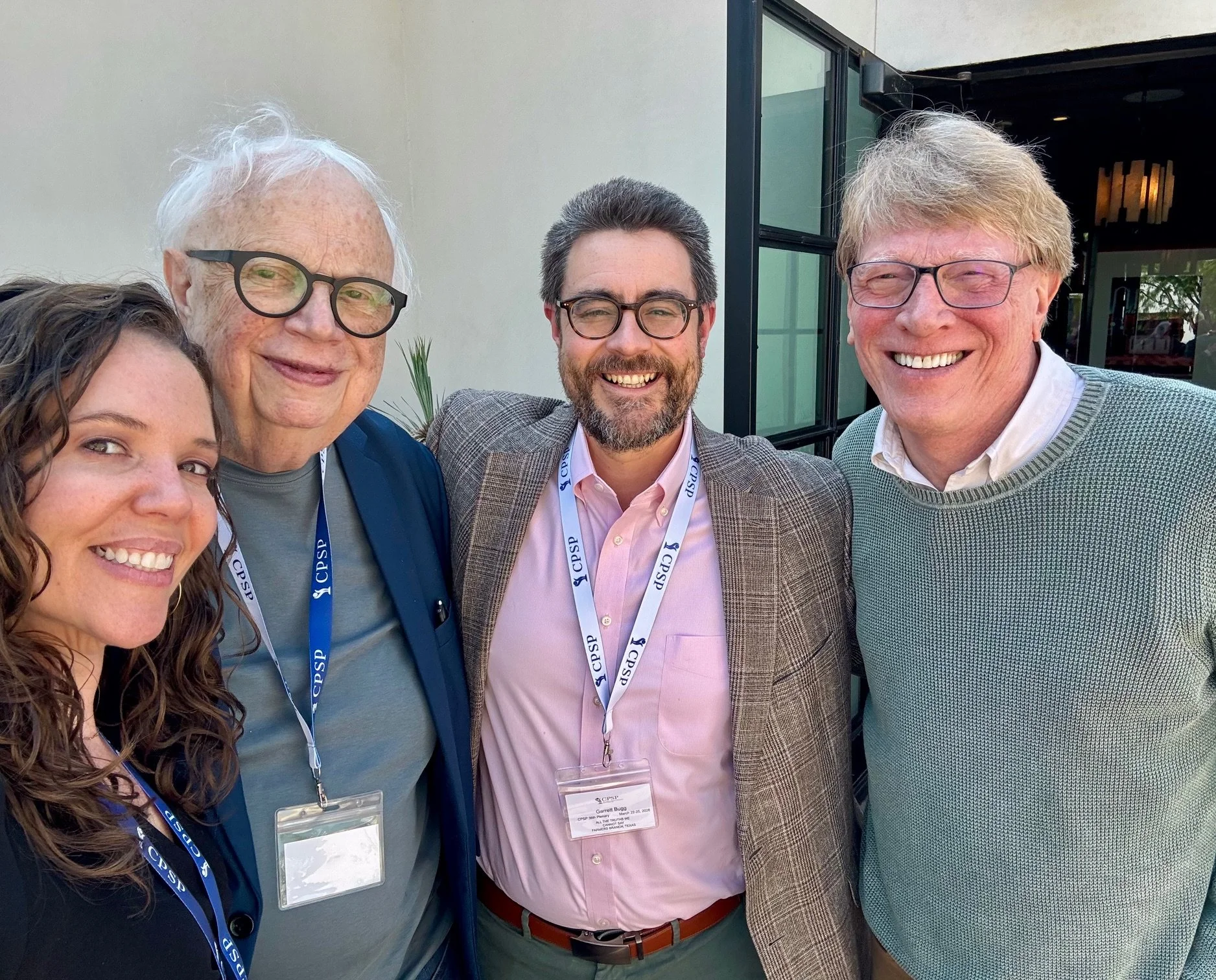
L-R: Rachel Greiner, Perry Miller, Garrett Bugg, Robert Dykstra
2026 Plenary
At the recent CPSP plenary, Perry Miller invited those gathered in the hospitality suite to choose a song that held personal meaning. What followed was deeply relational and, I would not hesitate to say, life-giving, shared moments of storytelling, laughter, and music that reflected the wide range of traditions and experiences present in the room. The atmosphere was open and engaging, with colleagues and trainees moving easily between conversation and song in a way that made the gathering feel both informal and deeply meaningful.
It is in moments like these that the heart of the College of Pastoral Supervision and Psychotherapy community becomes most visible. What makes CPSP so meaningful, among its many strengths, is that our covenant relationship is central and informs both who we are together and the work we are called to do. Relationship, rather than status, shapes the life of the community, and that relational grounding is especially evident in shared moments like storytelling and music.
Music is often described as a mirror of culture, reflecting how people express themselves, what they feel, and what they believe. While this is true, it's only part of the story. Music is also a powerful force in actively shaping and forming a culture’s values and beliefs. To understand this, we must move beyond thinking of music simply as entertainment and recognize its deeper influence, one that shapes the imagination, stokes desire, and profoundly forms our sense of identity and belonging.
A compelling example of this dynamic, especially as we approach the 250th anniversary of the nation’s founding, is the Scots-Irish (Ulster-Scots) immigration of the 1700s. These immigrants brought ballad-stories, fiddle tunes, reels, and jigs. The distinctive styles of many modern American country, bluegrass, and folk musicians trace directly back to these Scots-Irish settlers. Likewise, the dance traditions of the Appalachian region in the southeastern United States echo these enduring cultural roots.
These Ulster-Scots Presbyterians also brought with them their communal hymn singing, often unaccompanied, characterized by clear, strong, repetitive melodies that were easy to learn and share.
Now we shift the frame slightly beyond the church halls. The sound changes, but the cultural memory lingers, echoes, and reverberates. Instead of hymn singing, we hear fiddles carrying the melody in place of the voice, a faster foot-tapping tempo inviting movement rather than reflection. The music is repetitive with tunes that circle back on themselves in steady, familiar, almost hymn-like patterns. This is the world of reels and jigs, tunes like “Soldier’s Joy” or “Arkansas Traveler”, where rhythm becomes the driving force, an invitation to dance. And what it expresses is just as important as how it sounds: a sense of community life rooted in participation, survival carried through rhythm and motion, and a joy that is never separated from the pain of endurance or the cries of lamentations.
The historical experience of the Scots-Irish, as a marginalized frontier people often wary of centralized authority, carried forward into the music they created. Over time, this mindset helped shape the development of rock music, where themes of resistance, individual freedom, and emotional intensity come to the fore. In this sense, their story is almost prophetic, anticipating how music would later function, not merely as expression, but as a way of challenging power and authority. From the protest songs of the 1960s to the rebellious edge of punk to the social critique embedded in hip-hop, music becomes a space where cultural identity is both expressed and continually reimagined.
Building on Perry Miller’s earlier invitation in the hospitality suite to choose a song that held personal meaning, it is worth placing that moment within the larger story we have been reflecting on. The documentary linked below, Rock 'n' Roll Highway: Scots-Irish Influence on the Roots of Rock & Roll, traces this very movement across history. It shows how musical traditions carried by Ulster-Scots settlers, ballads, fiddle tunes, reels, and hymns, crossed the wild Atlantic and took root in the new world, eventually shaping what we now think of as American folk, country, bluegrass, and rock music. As you watch, you’ll notice how the film weaves together sound, place, and identity, showing how music moves from inherited tradition into new forms of expression, and how those expressions, in turn, shape the world around them.
The bottom line is that music is never just a backdrop to culture but one of the primary ways a culture understands, remembers, and reimagines itself and what it might become.
Here’s to Perry Miller!
Rocker Ricky Warwick & roots music enthusiast/DJ Ralph McLean from Northern Ireland go on a musical odyssey into rock ‘n’ roll history to trace the Ulster-Scots heartbeat at the core of the biggest cultural revolution of the 20th century. Thank you to Forged In Ulster A Channel for people interested in Scots-Irish / Ulster-Scots heritage & history around the globe. History & culture in Scotland, Ireland & America.
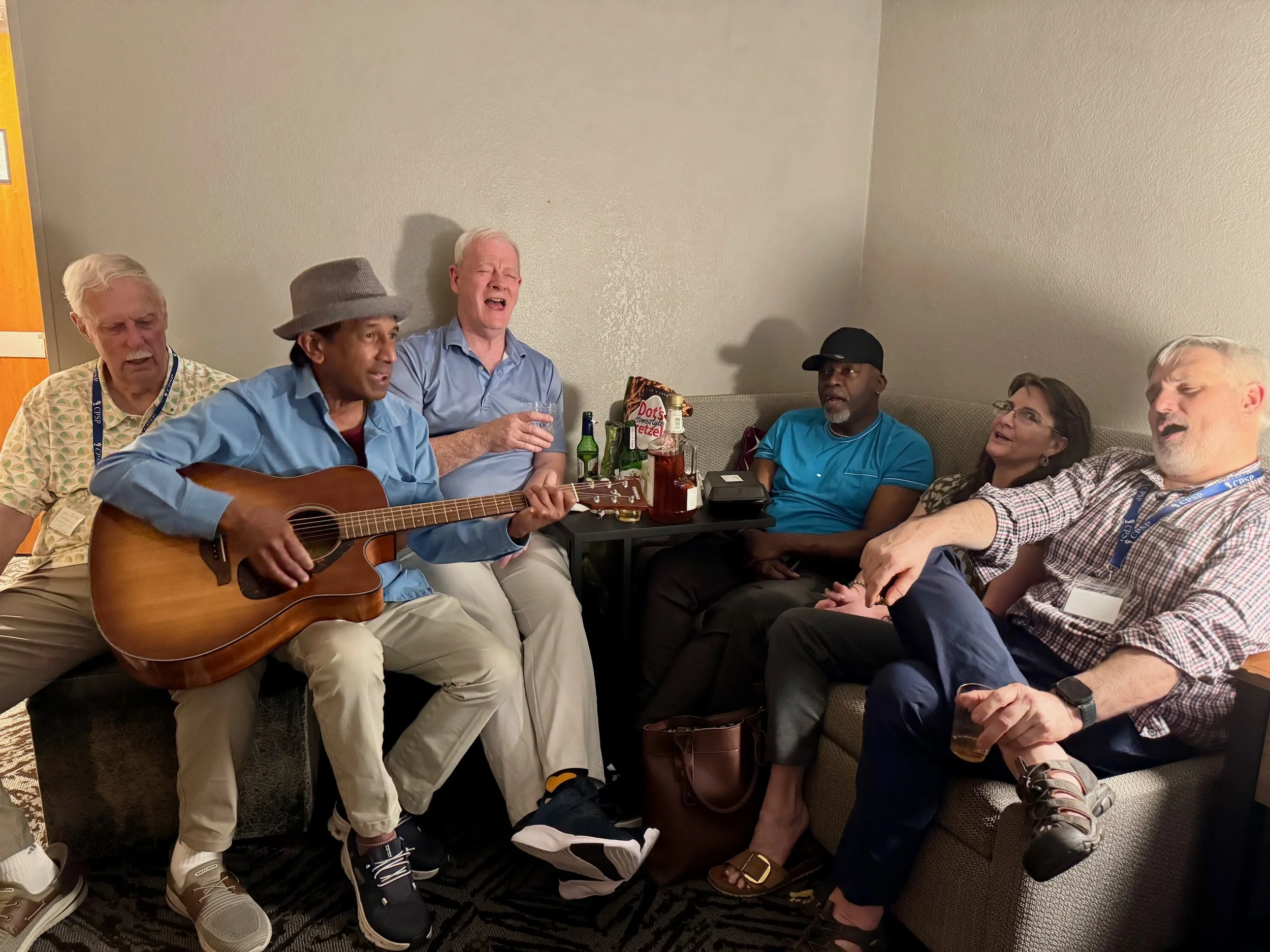
This Year’s Hospitality Room Playlist:
Leonard Cohen, Hallelujah
Adele, Hello
Pink Martini, Amado Mio
America, Horse with No Name
Brandi Carlile, The Story
Sheryl Crow, If It Makes You Happy
Morrissey, Suedehead
Nirvana, Where Did You Sleep Last Night
Yusuf/Cat Stevens, (Remember the Days of The) Old Schoolyard
Terry Jacks, Seasons in the Sun
Bruce Springsteen, Nebraska
The Soup Dragons, I'm Free
Willie Nelson, Help Me Make It Through the Night
Taylor Swift, Father Figure
Kris Kristofferson, The Pilgrim, Chapter 33
Judy Collins, Send in the Clowns
Chappel Roan, Pink Pony Club
Neil Diamond, Song Sung Blue
Keala Settle, The Greatest Showman Ensemble, This is Me
Clarence Carter, Patches
Neil Diamond, America
Sara Bareilles, She Used to Be Mine
Shirley Bassey, Send in the Clowns
Waylon Jennings, Willie Nelson, Mammas Don't Let Your Babies Grow Up to be Cowboys
Chris LeDoux, Cowboy Up
Xania Money, Let Go, Let God
George Michael, Careless Whisper
Amy Winehouse, Valerie
The Highwomen, If She Ever Leaves Me
Don McClean, American Pie
Phil Collins, Against All Odds (Take a Look at Me Now)
Arlo Guthrie, Alice's Restaurant Massacre
George Michael, Father Figure
America, Sister Golden Hair
Eagles, I Can't Tell You Why
Billy Joel, Piano Man
Eagles, Desperado
James Blake, Ludwig Goransson, Sinners Movie: Seance
Kaleo, Way Down We Go
Alex Warren, Who I Am
Shirely Bassey, This is My Life
Linda Ronstadt, Blue Bayou
The Highwomen, Crowded Table
David Guetta, Teddy Swims, Tones and I: Gone Gone Gone
Cowboy Junkies, Fuck I Hate the Cold
Frank Sinatra, Count Basie, Looking at the World Through Rose Colored Glasses
Lake Street Drive, I Don't Care About You