A Fall on the Cement Path: Remembering CPSP Diplomate, Ron Evans
A Fall on the Cement Path is an article written by Ron Evans.
Introduction and Remembrance by Geroge Hull.
Introduction
by George Hull
The on-call hospital chaplain often encounters patients who arrive at the emergency department (ED) after a fall. Sometimes a person may simply have tripped or lost their balance; at other times, medication or an underlying health condition may have contributed to the fall. Whatever the cause, a fall can have significant consequences, ranging from a temporary disruption of daily life to a profound and lasting change in a person’s ability to function independently.
Ron Evans, one of our beloved former CPSP members and a Diplomate in Clinical Pastoral Supervision, passed away on October 1, 2020. Ron was known for his rich storytelling, his occasional contributions to Pastoral Report, and his newsletter, The Sour Dough Bagel.
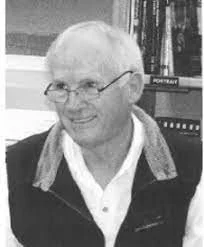
In the following article, Ron recounts an experience from his later years when he fell and broke his hip. With characteristic warmth and gratitude, he describes his delight at discovering a public restroom equipped with a handrail and a toilet raised a few inches above the usual height. Many of us have encountered such accommodations without giving them much thought. Ron invites us to see these ordinary public spaces through different eyes, appreciating how something we might easily take for granted can make a real difference in another person’s life.
Here’s to Ron Evans. May we speak his name often and remember him with gratitude.
A Fall on the Cement Path
by Ron Evans
I never would have believed I would be grateful to see a handrail beside a toilet seat. Or feel cared for by a woman’s voice somewhere in telephone never land instructing me on how to fix my TV. Nor could I have imagined the comfort felt in a nurse’s touch.
Such are the surprises when you fall and break your hip. Surprised by facts you knew long before, but which must be lost and found again and again.
Six weeks after the “accident,” it is hard to write about what happened, difficult to visit the scene, and remember again the details. It is nothing that dramatic, really- a fall on the cement walk resulting in a clean break in the hip. Far worse things befall us. Nevertheless, there is a darkness about it, images the mind resists. It is as if your system has been frightened and is trying to protect itself, still wanting to be done with the whole thing. Put it all out of mind.
Coupled with this reluctance, however, there is also the embarrassment of it all, the difficulty of facing the fact of your own carelessness. One old man in a rainstorm on a step ladder. Could disaster be far off? It will be referred to as an accident, but in your own mind, you know it wasn’t. It was carelessness. And, however many times you go over the details, the end of the story is always the same. So, you put on your hair shirt and beat yourself up about it.
But time passes, and if you watch, there are other moments, openings that arise as if by chance, that will not be sent away.
By good fortune, Norma was able to get me gathered up off the walk, into the car, and to the emergency ward, where the system worked chaotically but superbly. In retrospect, we should have called an ambulance, but we didn’t. Within 24 hours, however, I was through surgery and repaired -pin, plate, and all, forever after able to set off the beepers at security and give all the little folk in charge reason to be suspicious and feel useful. A live 77-year-old terrorist. Even more fortuitously, after a few days, the hospital needed my bed, and it was suggested I be shipped out to a physio program. Done. And here I am home, all in just over 3 weeks, getting better. Recovering to some state of normalcy will take longer, but it will happen.
I wouldn’t recommend the experience to anyone, but now that it has happened and I have time to reflect on events, there are stories to be told. There are three that I would share with you.
1. Throughout the hospital stay and since then, besides expert medical attention, perhaps the most reassuring aspect of the treatment was what I would term the intimacy that prevailed at unexpected moments. That is to say, nurses, doctors, physios, family members, yes, and the cleaning lady and the barber, were able to come close, speak, and most importantly, touch, in ways that lifted the spirit.
The young doctor in the emergency room who came close, put his hand on my shoulder and looked me in the eye and said “I think it’s broke but we will make sure and fix you up”, the nurse in the night who stood by the bed and rubbed my arm and asked what I needed, visitors who sat near my bed, hand outstretched to stroke my hand, the presence of my family, confirmed what I had known and talked about and even tried to teach but now knew as if for the first time.
When you are lying in your bed in the night, troubled by what has happened and wondering how healing will occur, when you can’t take care of basic functions on your own and there is no alternative but to call for help, it seems to me you are returned to a state of early childhood. Certainly, you are afraid and feel alone. One of the things that occurs on the battlefield is that a wounded soldier will be heard to call out for his mother. I don’t want to suggest that my state was near that severe, but something of the same atmosphere prevailed. The usual layers of protection, bravado, and assumptions about one’s dignity were peeled away, and like an infant in the arms of its mother, I was grateful for a nurse stroking my hand and calling me by name.
2. Soon after discharge from the physio program, there was a dinner to which we had been invited, honoring a friend for her accomplishments in the community. There was some doubt I would be mobile enough, but with a walker and some caution, we loaded up and departed. I should say that in an event like this, suddenly little things assume an importance you don’t realize under normal conditions. Getting over a door step, up a stair or two, and above all, navigating toilets becomes an issue. How do you go to the toilet with some degree of dignity? The basic issue is how do you lower yourself onto a toilet seat and then raise yourself from it. Under normal conditions, nothing to it. But in a public washroom with your pants at half-mast and your hip complaining bitterly and with no nurse to give you a hand, it’s different.
As we entered the dining facility, I at once took note of the toilet signs and decided to check things out to be on the safe side. It was with relief that I managed to get through the door and encountered a spacious room in which there were four toilets, one of which was reserved for wheelchairs. More than that, in the wheelchair stall, there was a toilet, raised a few inches higher than normal, beside which there was anchored a handrail. How lovely is thy dwelling place, O lord of hosts. Under normal conditions, such things don’t register, objects of interest in someone else’s world, but now you see them in a whole new light. With a handrail, you can sit down with some confidence and, in time, raise yourself up, find your balance, and restore yourself, your pants in place and your dignity intact.
3. The first evening after arriving home, I was all set to watch a football game only to discover that the TV was on the fritz, the settings out of order. There was no alternative but to phone the satellite company and get help. At the best of times this can be an ordeal. To begin with, you often make contact with someone on the other side of the world whose English is often on a par with your ability in their native tongue. Or, equally difficult, you are greeted by a computer geek who speaks computerese well, but English is quite another matter.
To my delight, like seeing a toilet with a handrail, I was greeted by a woman’s voice, middle-aged I would say, and I could understand her perfectly. She asked a question or two and then instructed me to go to the TV and turn off the power. I told her she would have to bear with me, as I had just returned from the hospital with a broken hip, and movement was difficult. As if she had just graduated from a course in pastoral care, she stopped and asked what had happened, with a note of concern in her voice, and then inquired how I was, reassuring me that I wouldn’t have to move again. She didn’t realize what she had done, and I did not try to tell her.
So, what am I to conclude from all this? I could wax eloquent on the meaning that lies here. The theological openings, the opportunity to put in a good word for God, are endless. But I will spare you that. Rather, I wish to express gratitude for friends and family, for professionals with a job to do, who were there, able to come close and touch and give expression to that inexpressible other that lies between us.
By Ron Evans: Coming Home: Saskatchewan Remembered
Ron Evans passed away quietly on October 1, 2020