The Psychodynamic Promise of CPSP Is Not Finished
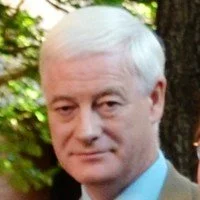
By David Roth
CPSP was born in 1990 as an act of professional dissent.
Fifteen clinical pastoral supervisors came together because they believed something important in clinical pastoral training was being lost. Under Raymond Lawrence’s leadership, they did not simply create another certifying organization. They sought to recover the transformative character of clinical training itself: rigorous attention to the person, the unconscious processes operating within relationships, the dynamics of groups and institutions, and the continuing formation of the clinician.
That history matters. But perhaps the most faithful way to honor it is not simply to preserve what CPSP’s founders created. It is to ask what their rebelliousness requires of us now.
CPSP rightly identifies itself with the psychodynamic tradition. Our language reflects it. We speak of transference and countertransference, primary process, group relations, the living human document, the use of self, and the importance of examining what occurs beneath the surface of an encounter. Our chapters are intended to be communities in which professional development remains relational rather than merely credentialed.
But a psychodynamic identity cannot simply be inherited. It has to remain alive. That is particularly important because psychodynamic thought itself has not stood still.
Freud opened an extraordinary door by insisting that much of mental life occurs outside conscious awareness. The century since then has brought object relations, attachment theory, contemporary relational approaches, increasingly sophisticated understandings of trauma and implicit memory, and new attention to affect and embodiment. Group relations has taught us to recognize that unconscious processes belong not only to individuals but to groups and institutions.

More recently, neuroscience and neuropsychoanalysis have begun to illuminate some of the biological processes underlying affect, consciousness, memory, prediction, and human relatedness. None of this makes classical psychodynamic insight obsolete. Quite the opposite. It gives us opportunities to understand more precisely phenomena that clinicians have observed for generations.
For chaplaincy, this matters enormously.
When we enter a room, we do not encounter an abstract category called “spiritual distress.” We encounter a human being whose present experience emerges from affect, memory, attachment, relationships, culture, bodily states, losses, expectations, unconscious patterns, and systems of meaning. We encounter families carrying their own histories and anxieties. We ourselves enter the encounter with histories, affects, expectations, and vulnerabilities of our own. And all of this occurs within healthcare institutions that generate powerful conscious and unconscious dynamics.
Psychodynamic chaplaincy should help us read that complexity.
This is why self-awareness, indispensable though it is, cannot be the endpoint of psychodynamic formation. Knowing what is happening inside me matters because it helps me understand what may be happening between us—and, cautiously, what may be happening within the person before me.
Countertransference is not simply something to notice about myself. It is clinical data. Affective responses are clues. Patterns of relationship are clues. What is absent from a story can be as important as what is present. So can shifts in language, contradiction, unexpected intensity, avoidance, silence, humor, bodily expression, and the roles into which patients, families, staff members, and institutions unconsciously invite us.
This is where the case study remains so important. Its purpose is not simply to demonstrate that a trainee can reflect on an encounter. At its best, it teaches disciplined curiosity: What happened here? Why might it have happened? What did I experience? What did the other person communicate directly and indirectly? What patterns became visible? What hypotheses can reasonably be formed, and what evidence might cause us to revise them?
That is clinical work. And it suggests something about the future of CPE. Experiential formation must remain central. We should resist any reduction of clinical training to techniques, competencies, or boxes to be checked. CPSP has been right about that from its beginning.
But resisting reductionism does not mean resisting knowledge.
The psychodynamic clinician of the twenty-first century must know more, not less, about human beings than those who came before us. Our trainees should encounter serious theory alongside serious supervision. They should learn about affect, attachment, implicit memory, systems, culture, group dynamics, and contemporary understandings of consciousness. They should learn to formulate what they see rather than simply describe it. They should understand not merely what they did in an encounter but why one intervention might be clinically preferable to another. And, yes, supervisors too must continue to learn and grow.
Our understanding of professional competence must mature with this. Not every person needing spiritual support requires the same level of clinical expertise. Mature professions recognize gradations of need, competence, and responsibility. Chaplaincy should be able to do the same without regarding distinctions in scope as threats to professional identity. The more clearly we can articulate what advanced clinical chaplaincy actually contributes, the stronger rather than weaker the profession becomes.
This is not a departure from CPSP’s tradition. It is its continuation. CPSP began because a small group of people believed that merely maintaining established professional practices and their structures was not enough. They were willing to challenge what had become familiar because they cared about the integrity and efficacy of clinical pastoral work.
Thirty-six years later, we should be willing to challenge the familiar again—including the familiar within ourselves.
To call our work psychodynamic is to make a demanding claim. It means remaining curious about what lies beneath appearances. It means tolerating what we do not yet know. It means allowing new knowledge to disturb settled assumptions. And it means submitting our own professional identity to the same searching examination we ask of every trainee.
The psychodynamic promise of CPSP is not something behind us. It remains unfinished work.
David Roth is a member of the Nautilus Pacific Chapter and author of the new book Clinical Chaplaincy: Principles & Practice published by VerbumIcon.com