Part I of a Two Part Series on Chaplaincy and Pastoral Counseling
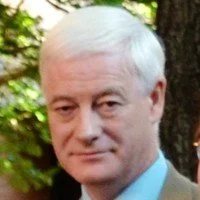
by Dr. R. Esteban Montilla, Ph.D.
Definition
Pastoral counseling is a professional, intentional, and ethically responsible relationship whose purpose is to increase practical wisdom, create community, and provide a trustworthy space in which an individual, couple, family, or group can explore history, relationships, beliefs, emotions, decisions, and possibilities for growth. Its distinctive contribution lies in bringing pastoral theology, spirituality, ethics, human rights, and relevant knowledge from the human sciences into disciplined conversation without reducing the person to a single explanatory framework.
Functions of Pastoral Counseling
Pastoral counseling recognizes strengths that give life and identifies obstacles that restrict human development. Its work includes practical discernment, community, pastoral availability, spiritual development and faith, examination of distortions of the soul, relational repair or redefinition, the defense of dignity and human rights, and integral development. These are not isolated techniques, but dimensions of a pastoral relationship that understands the human organism within biological, cultural, historical, relational, spiritual, and institutional contexts.
Increasing wisdom does not mean accumulating information or receiving ready-made answers from religious authority. Practical wisdom helps a person understand a situation within its context, recognize ethical implications, consider foreseeable consequences, and make decisions that protect dignity and promote life. The pastoral counselor does not decide for the person seeking assistance, but offers questions, knowledge, perspectives, and resources that expand discernment. The aim is responsible self-determination rather than obedience or dependence.
Pastoral counseling also seeks to create community because suffering often intensifies with isolation and the loss of trusted relationships. Community is not limited to participation in a congregation. It may involve strengthening ties with family, friends, faith communities, support networks, and other allies, while discerning which relationships no longer promote life or dignity. Julianne Holt-Lunstad, Timothy B. Smith, and J. Bradley Layton (2010), in a meta-analysis of 148 studies involving 308,849 participants, found that stronger social relationships were associated with a higher probability of survival. Their findings do not establish an effect of pastoral counseling, but they underscore the human significance of relational connection.
A further contribution is a space of availability. Being available means offering time, presence, attention, and a sufficiently trustworthy relationship in which another person can speak without being reduced to a diagnosis, moral failure, or religious category. Pastoral availability includes attentive listening, discernment, thoughtful questioning, perspective, appropriate confrontation, and protection of the person’s freedom. It also requires recognition of professional limits and referral or coordination when needs exceed the counselor’s competence or scope of practice.
Pastoral counseling fosters spiritual development, understood as the human capacity to transcend immediate experience in the search for meaning, purpose, and connection with that which gives life to existence. This development has an inward movement expressed in self-care, integration of personal history, meaning, purpose, and faith, and an outward movement expressed in responsible relationships, service, justice, human dignity, care for creation, and the common good. Research from related fields supports the importance of attending competently to religious and spiritual concerns.
Laura E. Captari and her colleagues (2018), in a meta-analysis of 97 psychotherapy outcome studies involving 7,181 participants, found that spiritually or religiously adapted interventions could improve psychological and spiritual functioning in some comparisons. In the most rigorous studies, there was no significant advantage in reducing psychological distress, although spiritual well-being improved. Robert W. Kirchoff and his colleagues (2021) likewise found associations between spiritual care and patient or family satisfaction, quality of life, and spiritual well-being in hospital studies. These findings should not be treated as direct evidence for pastoral counseling. Still, they support competent attention to spirituality in accordance with the values and preferences of the person receiving care.
Pastoral counseling also assists in the development of faith. Faith is more than assent to doctrine. It is a form of trust that develops, is questioned, may be disrupted, and can be reconstructed. A life-giving faith can sustain convictions without denying uncertainty and can engage difference without dehumanizing others. Kenneth I. Pargament, Harold G. Koenig, Nalini Tarakeshwar, and June Hahn (2004), in a longitudinal study of 268 medically ill hospitalized older adults, found that different forms of religious coping were associated with different outcomes. Their findings illustrate an important pastoral concern. It is not enough to ask whether a person has faith; it is necessary to understand how that faith shapes suffering, relationships, responsibility, hope, and decisions.
Within this framework, the pastoral counselor may help identify and address distortions of the soul. The term does not designate a medical, psychiatric, or psychological diagnosis, nor does it treat the soul as separate from the human organism. Soul is used as a pastoral language for lived interiority, in which memory, emotions, desires, beliefs, conscience, imagination, meaning, and transcendence are interwoven with biological, historical, cultural, and social existence. Distortions of the soul are therefore patterns of interpreting, feeling, relating, or acting that restrict clarity, responsibility, or participation in what promotes life.
They may appear individually through destructive shame, ego inflation, inner emptiness, or rigid thought; socially through racism, inequality, prejudice, violence, or abuses of power that are presented as natural or morally defensible; and spiritually through punitive images of God, imposed guilt, paralyzing fear, indiscriminate demonic attributions, false promises, or dependence on religious leaders that weakens self-determination. Miranda Fricker (2007) showed how prejudice can also harm people in their capacity as knowers by diminishing the credibility of their testimony or limiting the interpretive resources available for understanding experience. Ian James Kidd and Havi Carel (2017) examined comparable testimonial and hermeneutic injustices in illness and health care.
Pastoral counseling assists with the formation, strengthening, transformation, and, when necessary, ending of relationships. It can help people communicate needs, establish boundaries, acknowledge others, assume responsibility, and manage conflict. Repairing a rupture does not require preserving every relationship. Some can be strengthened through truth, accountability, restitution, and sustained change, while others need to be limited or ended to protect safety and dignity. Forgiveness, when it is rooted in the convictions of the person receiving assistance, does not require denying harm or automatically restoring trust.

The defense of human rights is part of pastoral responsibility because assistance that listens to suffering while remaining indifferent to the conditions that produce it can spiritualize injustice. Pastoral advocacy may involve helping a person understand rights, obtain services, participate in decisions, protect confidentiality, gain language assistance, or respond to abuse and exclusion. The World Health Organization (2023) emphasizes that the right to health is inseparable from other rights and identifies non-discrimination as a fundamental principle. The counselor does not replace the person’s voice, but helps create conditions in which it can be heard and exercised more freely.
These functions converge in integral human development. The human organism is an indivisible unit that thinks, imagines, feels, remembers, interprets, relates, acts, and transcends under the combined influence of biology, culture, history, and context. Pastoral counseling therefore does not detach spirituality from biological existence, separate the person from relationships and community, or reduce suffering to an exclusively intrapsychic explanation. It seeks to understand life in its multiple relationships while recognizing when a need requires consultation, coordination, or referral to another profession or service.
Professional Identity and Scope of Practice
Pastoral counseling has its own professional identity while remaining in dialogue with psychology, professional counseling, psychiatry, social work, education, and other human sciences. It may critically draw on knowledge and intervention models from these disciplines without becoming a variant of any of them. Such interdisciplinary practice requires understanding the assumptions, purposes, scope, and limits of the models employed and, within the practitioner’s competence, integrating them with pastoral theology, spirituality, culture, ethics, human rights, and the wisdom of communities. Its distinctive contribution is a professional relationship in which spiritual, relational, ethical, existential, and faith-related questions can be examined without being automatically subordinated to another discipline.
As a professional discipline, pastoral counseling requires specialized education, defined competencies, supervision, continuing education, accountability to professional communities, and ethical standards governing authority, power, boundaries, and responsibility. The College of Pastoral Supervision and Psychotherapy (CPSP, 2022), for example, includes certification as a Clinical Chaplain/Pastoral Counselor and distinguishes this competence from state-regulated mental health practice; it also maintains a professional ethics code (CPSP, 2020). Certification, however, does not create legal uniformity. Protected titles, licensure requirements, and scopes of practice vary by jurisdiction, and pastoral certification alone does not authorize practice in a regulated mental health profession. Professional maturity therefore requires knowledge of one’s competence, applicable law, ethical obligations, and the criteria for consultation, coordination, or referral.
Conclusion
Pastoral counseling is a profession of wisdom, community, and human development. It establishes an ethically accountable pastoral relationship in which people can understand lived experience, recognize strengths, confront obstacles to growth, examine distortions of the soul, deepen spirituality and faith, strengthen or redefine relationships, exercise their rights, and develop greater capacity for responsible discernment. Its authority rests not merely on ordination, doctrinal knowledge, or institutional position, but on education, competence, ethical practice, supervision, accountability, and recognition of professional limits.
Those who practice pastoral counseling must therefore remain engaged in their own revitalization so that they can assist the revitalization of others. The purpose is not to determine what another person must believe, feel, or decide, but to create conditions in which people can think more clearly, imagine possibilities, understand emotions, strengthen life-giving relationships, act responsibly, and transcend immediate circumstances with dignity and self-determination. Pastoral counseling contributes to human development by engaging the person as an indivisible human organism whose story unfolds within relationships, communities, cultures, institutions, and the search for meaning.
References
Captari, L. E., Hook, J. N., Hoyt, W., Davis, D. E., McElroy-Heltzel, S. E., & Worthington, E. L., Jr. (2018). Integrating clients’ religion and spirituality within psychotherapy: A comprehensive meta-analysis. Journal of Clinical Psychology, 74(11), 1938–1951. https://doi.org/10.1002/jclp.22681
College of Pastoral Supervision and Psychotherapy. (2020). CPSP code of professional ethics and principles for processing ethical complaints.
College of Pastoral Supervision and Psychotherapy. (2022). Certification manual.
Fricker, M. (2007). Epistemic injustice: Power and the ethics of knowing. Oxford University Press. https://doi.org/10.1093/acprof:oso/9780198237907.001.0001
Holt-Lunstad, J., Smith, T. B., & Layton, J. B. (2010). Social relationships and mortality risk: A meta-analytic review. PLOS Medicine, 7(7), e1000316. https://doi.org/10.1371/journal.pmed.1000316
Kidd, I. J., & Carel, H. (2017). Epistemic injustice and illness. Journal of Applied Philosophy, 34(2), 172–190. https://doi.org/10.1111/japp.12172
Kirchoff, R. W., Tata, B., McHugh, J., Kingsley, T., Burton, M. C., Manning, D., Lapid, M., & Chaudhary, R. (2021). Spiritual care of inpatients focusing on outcomes and the role of chaplaincy services: A systematic review. Journal of Religion and Health, 60(2), 1406–1422. https://doi.org/10.1007/s10943-021-01191-z
Pargament, K. I., Koenig, H. G., Tarakeshwar, N., & Hahn, J. (2004). Religious coping methods as predictors of psychological, physical, and spiritual outcomes among medically ill elderly patients: A two-year longitudinal study. Journal of Health Psychology, 9(6), 713–730. https://doi.org/10.1177/1359105304045366
World Health Organization. (2023, December 1). Human rights.